Two San Simeons: the historic bay and the 1960s Acres
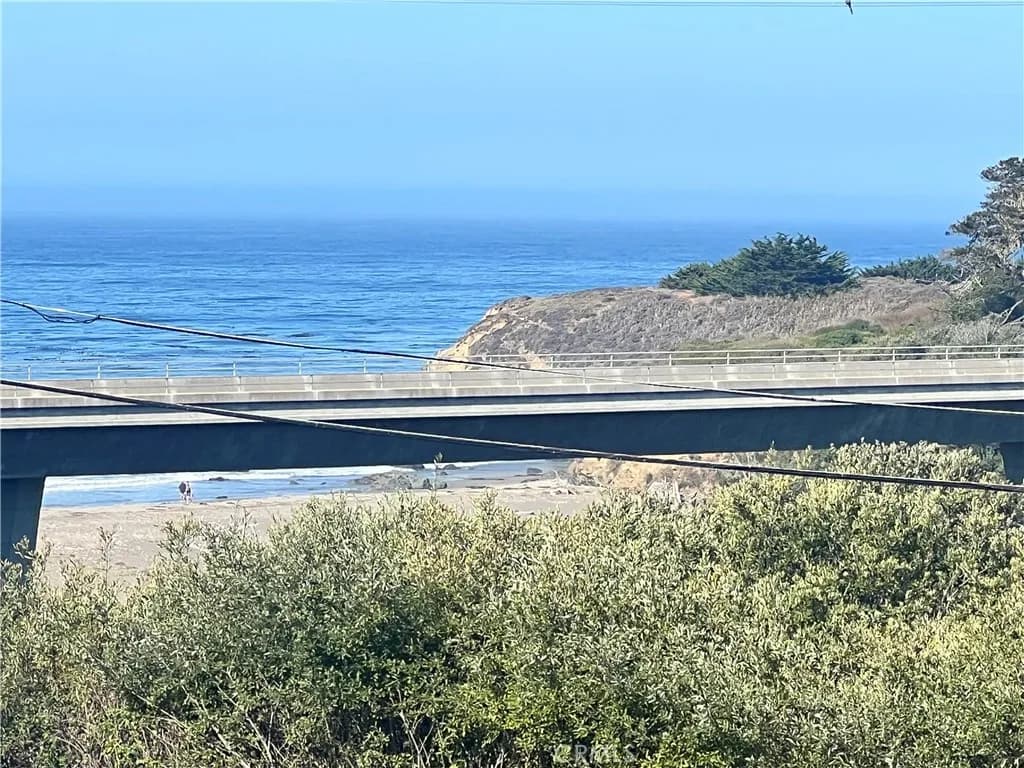
San Simeon is really two places. The original settlement grew at San Simeon Bay. Portuguese shore whalers arrived around 1864, and a first wharf went up in 1869. In 1878 George Hearst built a replacement wharf that pulled the little town to its present spot, including the general store later known as Sebastian’s. In 1953 the Hearst Corporation donated William Randolph Hearst Memorial Beach to the county, and the current pier dates to 1957. Today the old village is a historic visitor stop framed by Hearst land and state park.
The community where people actually live, historically called San Simeon Acres, sits about four miles south along Highway 1. It was developed primarily in the 1960s and 1970s, with motels, restaurants, condominiums and homes serving Hearst Castle visitation. If you’re buying, the Acres is effectively the entire private market. That makes its age of construction and its coastal exposure the recurring themes of your diligence.
The connection moratorium that shapes the whole market
Water and sewer in San Simeon come from the San Simeon Community Services District (CSD). Its systems were built out over decades from originally purchased infrastructure. Its wastewater plant, run by a contract operator, also processes sewage for Hearst Castle. A moratorium on new water and sewer connections within district boundaries has been in force for decades. Accounts of when it began differ. The district’s own summary dates it to the mid-1990s, while its ordinance record and later reporting place the first moratorium ordinance earlier.
The result is a hard cap on conventional growth. New construction, or a more intensive use that needs new service, faces a threshold problem before design ever starts. Separately, the county’s vacation-rental rules in the Coastal Zone require the water and sewer supplier to confirm it has adequate capacity to serve the use. In May 2024 the district applied to the county Local Agency Formation Commission (LAFCO) to dissolve, with its services moving to a new county service area. LAFCO has kept the application on hold since June 2024 while it waits for more information. As of September 2026 no hearing had been scheduled, and LAFCO said one could be a year or more away. County staff have run the district’s administration as emergency support since September 2025. In September 2026 the Board of Supervisors also asked staff to explore consolidating the district with the Cambria Community Services District.
If you’re buying, treat CSD status, capacity and any pending district actions as first-order diligence. Confirm current policy directly with the district and the county.
The 2005 Hearst Ranch deal fixed San Simeon’s surroundings
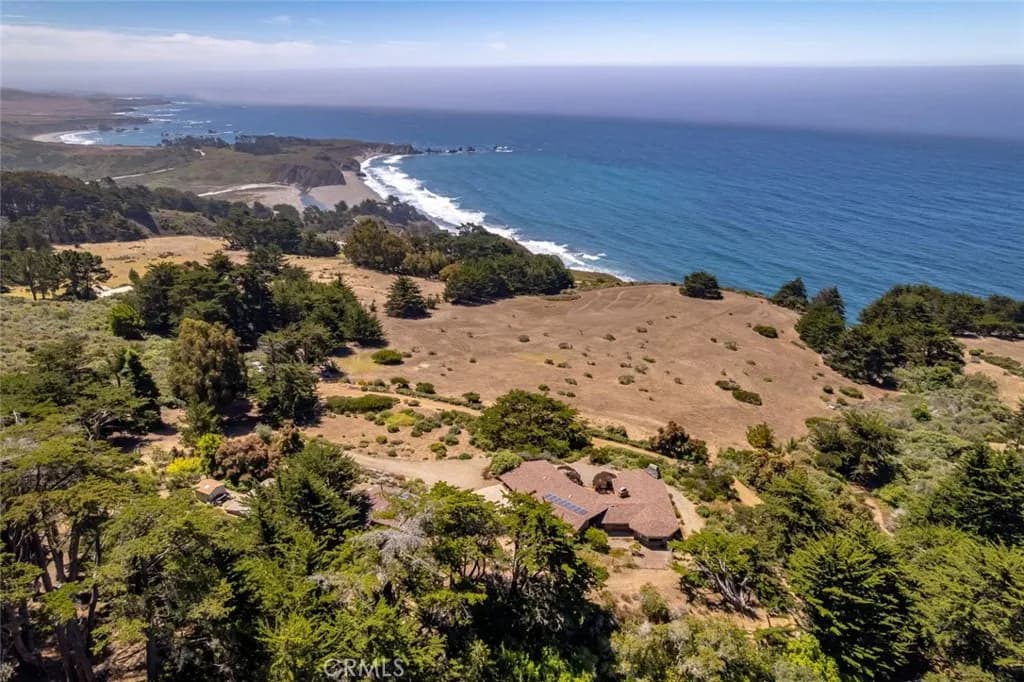
The roughly 82,000-acre Hearst Ranch surrounds San Simeon and has about 18 miles of shoreline. Decades of large development proposals for it, including a 1980 plan for resorts and two golf courses, ended with a landmark 2005 conservation transaction. Hearst transferred about 1,500 acres on the ocean side of Highway 1 to California State Parks and Caltrans. The State Coastal Conservancy and Wildlife Conservation Board funded an 80,000-acre conservation easement over the ranch’s east side. The California Rangeland Trust now holds and monitors it. The whole deal totaled roughly ninety-five million dollars.
If you own property here, the effect is unusual permanence. The open ranchland backdrop, the undeveloped coast and the community’s fixed boundaries are protected by recorded instruments, not merely by zoning that could change. State Parks has since pursued Coastal Trail segments and coastal camping concepts within the protected lands.
Elephant seals, a lighthouse and protected waters at the north edge
A few miles north of town, the Piedras Blancas elephant seal rookery has become one of Highway 1’s signature wildlife stops. Northern elephant seals established a colony at Piedras Blancas and San Simeon beaches in 1990. The first pup was born in 1992, and the rookery has grown steadily. The bluff-top viewing area is free, open year-round and staffed by docents. The most dramatic activity comes in the December-through-March birthing and breeding season. The adjacent Piedras Blancas Light Station, first illuminated in 1875, is an Outstanding Natural Area managed by the Bureau of Land Management. It sits within the California Coastal National Monument and offers guided tours.
Offshore, the Piedras Blancas State Marine Reserve and Conservation Area protect nearly twenty square miles of water. The coast also falls within the Monterey Bay National Marine Sanctuary, which the Coastal Discovery Center at Hearst Memorial Beach interprets locally. Together these designations make the community’s wild setting a managed, durable feature.
Vacation rentals under the county’s Coastal Zone rules
San Simeon is unincorporated, so it follows San Luis Obispo County’s Vacation Rental Ordinance, under the Coastal Zone track. The county’s coastal vacation rental guidance names San Simeon among the communities where a discretionary Minor Use Permit is required. Some other coastal communities can use an over-the-counter zoning clearance instead. You also need a county business license with transient occupancy tax registration. The coastal standards include separation distances between vacation rentals and other visitor-serving accommodations. They also cover occupancy limits tied to bedrooms and on-site parking, exterior appearance requirements and a will-serve letter. That letter confirms the water and sewer supplier can accommodate the use. It’s a step with real teeth in San Simeon, given the San Simeon Community Services District’s connection moratorium.
The county actively manages the program, including an annual review fee for short-term rentals adopted effective January 2026. Eligibility is parcel-specific and the standards evolve. If you’re investing, confirm current requirements with the county and the district before you underwrite rental income.
Highway 1 access: reopened through Big Sur, always weather-dependent
San Simeon’s economy and daily life ride on Highway 1. Multi-year landslide closures in Big Sur began in January 2023, and 2024’s Regent’s Slide compounded them. They cut through-traffic between Carmel and the San Luis Obispo County coast, but the highway through Ragged Point, San Simeon and Cambria stayed open throughout. On January 14, 2026, Caltrans reopened the final closed segment ahead of schedule. That restored the uninterrupted coastal drive and reconnected San Simeon to northbound touring traffic.
Reopening isn’t permanence. Caltrans notes some 1,500 mapped slides along this coast, and slides, storms and wildfire have each forced temporary closures somewhere on the corridor. If you own property or run a hospitality business here, treat full access as the current state, not a guarantee. If you’re traveling or buying with plans that depend on access, check Caltrans road conditions for the current status.