How a court settlement still governs building on the Nipomo Mesa
Nipomo’s water framework comes from the adjudication of the Santa Maria Groundwater Basin. A court-approved stipulation in 2005 split the basin into management areas. Our Arroyo Grande page tells the story of the adjudication itself, because the Northern Cities Management Area governs there. Nipomo’s piece is the Nipomo Mesa Management Area (NMMA). A court-created Technical Group runs it. The group monitors wells, reports to the court each year and declares Potentially Severe and Severe Water Shortage Conditions using a key-wells index. The Mesa has spent extended periods in the severe range. The Nipomo Community Services District (NCSD) is just one of several purveyors here. Private water companies and thousands of unmetered overlying wells share the area with it. The district has at times held new service applications and imposed staged conservation.
The adjudication’s physical solution is the Nipomo Supplemental Water Project. It’s a pipeline that brings City of Santa Maria water across the river to the Mesa, and its first phase was completed in 2015. The stipulation obligates the NCSD to take escalating minimum deliveries over time. It also requires new urban water demands in the NMMA to pay toward or deliver supplemental water. The county reinforced this in 2006 with an ordinance tying new subdivisions in the Nipomo Mesa water conservation area to supplemental-water fees.
If you’re buying or building, all this history comes down to one question to ask early. What does the current NMMA annual report say, and will the relevant purveyor issue a will-serve letter for this parcel today? Both answers change, so verify them at the time of your transaction with the NCSD and the NMMA’s published reports.
Dana Reserve: what’s actually entitled, after the lawsuits
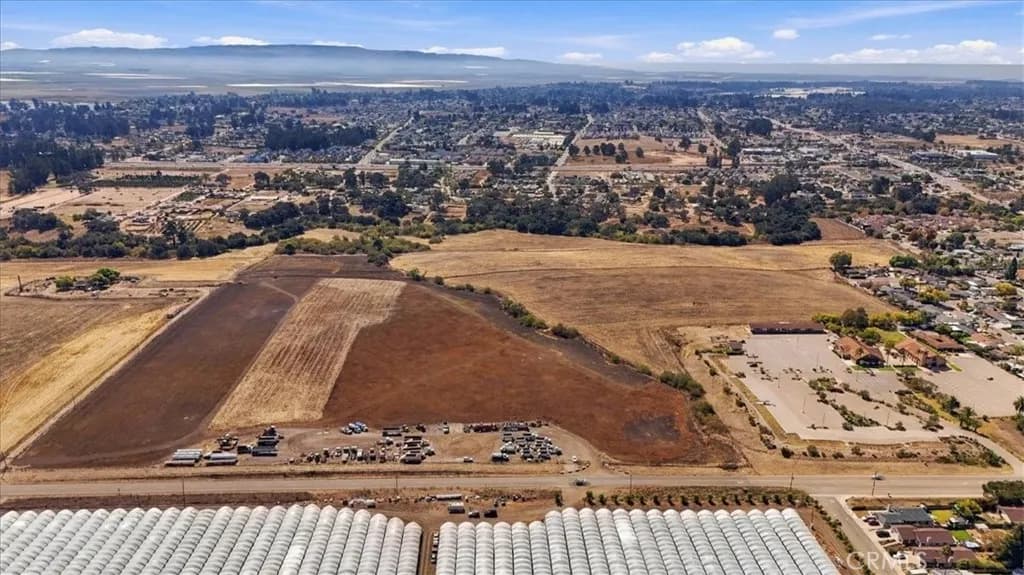
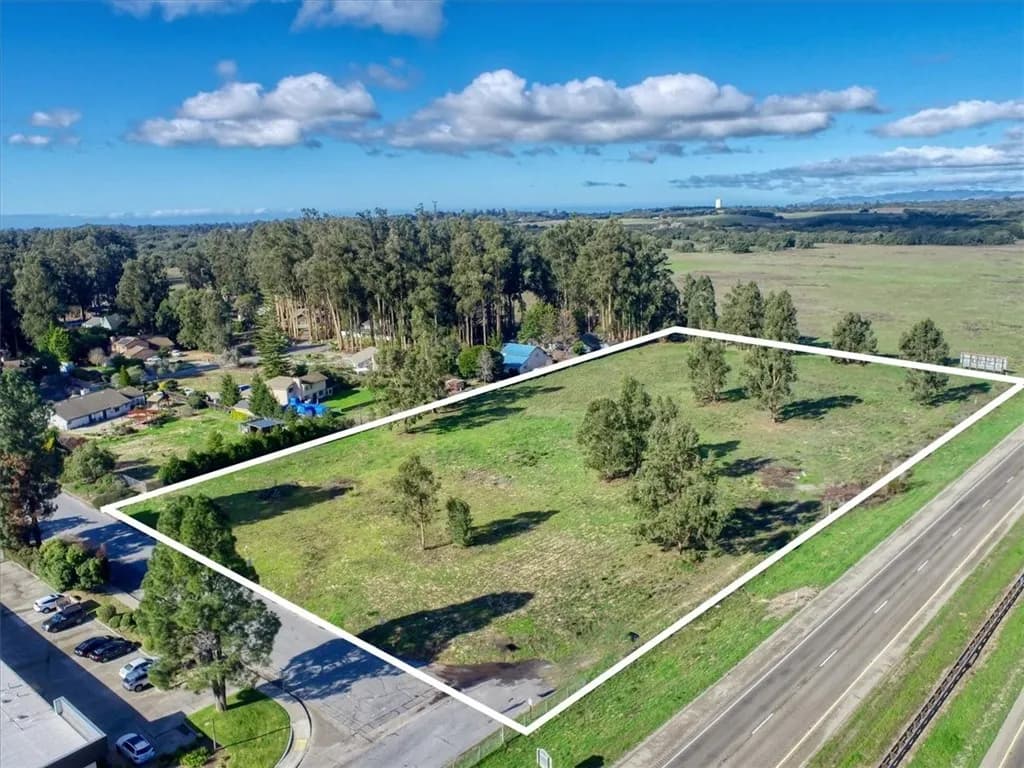
The Dana Reserve Specific Plan covers 288 acres of former Rancho Nipomo grazing land west of US 101 and south of Willow Road. That’s about a mile north of the Tefft corridor. Here’s how it was approved. The Board of Supervisors adopted the plan 3-2 in April 2024. The Nipomo Action Committee and the San Luis Obispo chapter of the California Native Plant Society sued over environmental impacts, including oak woodland and rare-manzanita habitat. They later challenged the Local Agency Formation Commission (LAFCO) annexation. A 2025 settlement among the developer and both groups produced a revised plan. The Planning Commission approved the revision in September 2025, and the Board gave final approval, again 3-2, on November 4, 2025.
As amended, the plan allows up to 1,242 residential units, down from 1,370. It also allows commercial and non-residential floor area, including visitor-serving and education uses. It expands open space, and it builds in off-site oak-preserve mitigation and road connections between Tefft Street and Willow Road. The site was annexed into the Nipomo Community Services District in November 2024. That ties its water service to the supplemental-water framework described in the Mesa water section. This page doesn’t predict traffic, views or market effects. Entitlement milestones are facts, and buildout timing isn’t. The county’s Dana Reserve project page is the authoritative place to verify its status on any given date.
Reading a Mesa acreage parcel: start with the zoning category
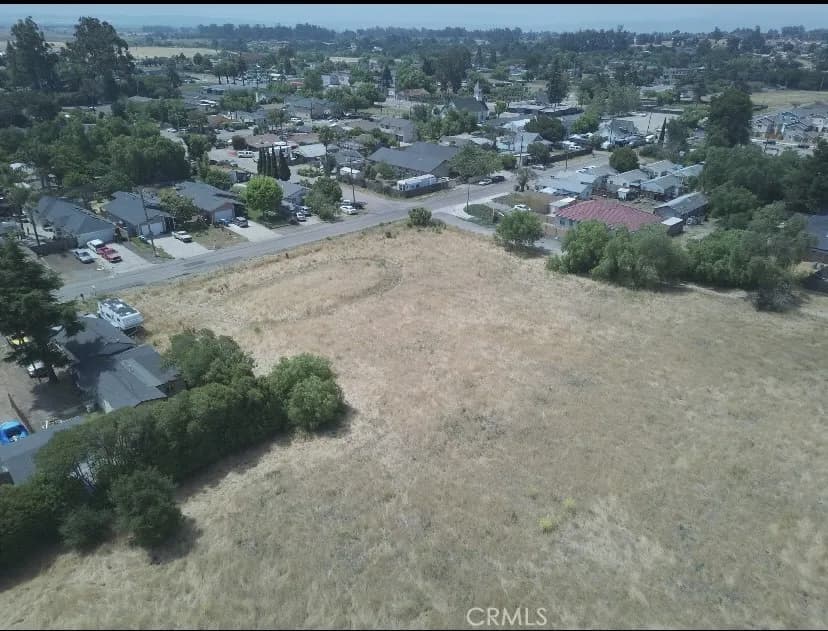
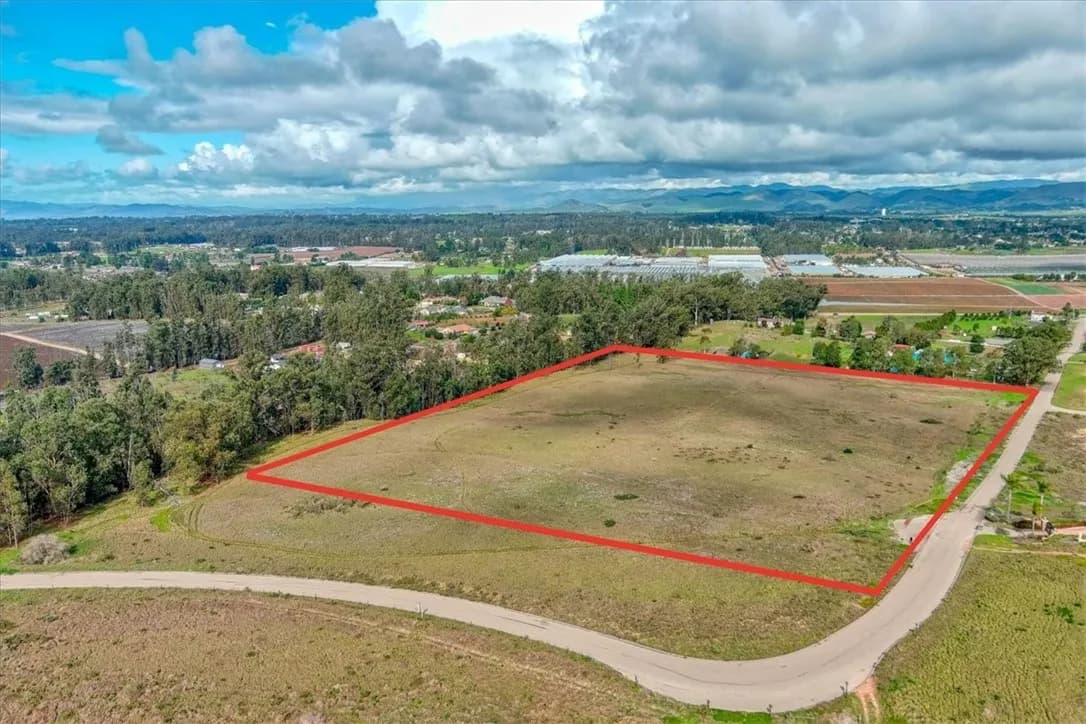
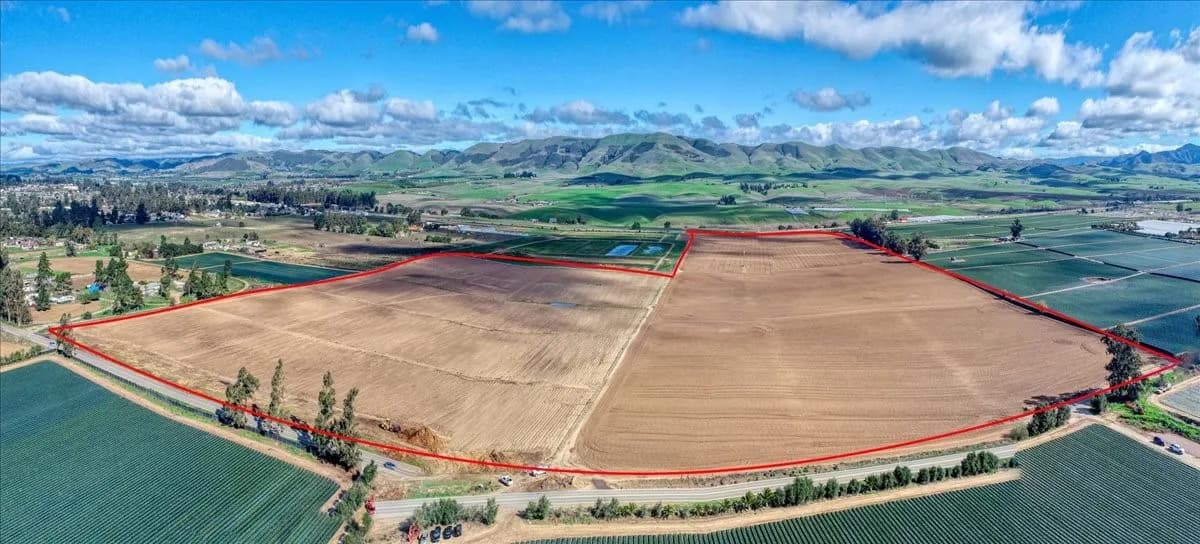
Rural Nipomo runs on San Luis Obispo County’s inland Land Use Ordinance. Parcels are mapped into categories like Residential Rural, Residential Suburban and Agriculture. The South County area plan’s community standards shape them further. In places, so do combining designations for hazards and sensitive resources. The category, not the acreage, controls what a parcel supports. That includes animal-keeping standards, accessory structures like shops and barns, secondary dwellings and whether the land can divide at all. Our Arroyo Grande guide covers the general story of rural zoning. Nipomo’s own angle is the Mesa’s mix of suburban-scaled lots and true rural parcels, side by side under tree canopy. Two neighboring properties there can carry meaningfully different rulebooks.
Three Nipomo-specific overlays deserve attention. First, water: a parcel’s build capacity can turn on will-serve availability or well viability under the NMMA framework. Second, fire: canopy parcels map into the state’s hazard-severity tiers. Those tiers shape the building standards for new construction. In high and very high zones, they also add a defensible-space step to a home sale. Third, subdivision: the county’s agricultural cluster provisions govern how agriculture-zoned land can concentrate homesites while preserving farmland. It’s a specialized path with its own findings. None of these are reasons to avoid acreage. They’re the checklist that separates an informed offer from an assumption. Verify the parcel’s category and applicable standards with County Planning & Building before you write an offer.
Trilogy at Monarch Dunes, precisely described
Trilogy at Monarch Dunes is the residential heart of a roughly 957-acre specific plan area on the western Mesa. It has been developed since the mid-2000s within what the county has processed as the Monarch Dunes (Woodlands) specific plan. That project lineage dates to county approval of The Woodlands in 1998. Trilogy is open to residents of all ages. Retirement-focused websites persistently mislabel it as a 55+ community, but the homeowners association’s own materials state it’s open to all ages. Getting this right matters for accurate marketing and for fair housing. The community pairs golf with the Monarch Club. The golf is a championship course plus a short challenge course. Club membership attaches to every home and includes dining, spa and fitness facilities.
If you’re buying, note three things about how the community is set up. None of them needs a fee figure. Ownership carries mandatory club membership with its own rules and obligations. Utilities run through the Woodlands Mutual Water Company, not the Nipomo Community Services District. It’s a shareholder corporation serving the specific plan area. And community rules prohibit rentals shorter than 30 days, which takes nightly-rental strategies off the table. Trilogy also isn’t Nipomo’s only newer construction. Blacklake predates it as a golf community. Additional phases and specific plan amendments have kept moving through county processes, and the Dana Reserve will eventually add a third master-planned pole. Read the current covenants, conditions and restrictions (CC&Rs), club documents and water-company materials before relying on any description, including this one.
Nipomo’s geography: a 101 town on the county line
Nipomo sits on the county’s southern edge. US 101 crosses the Mesa, with its main local interchange at Tefft Street and a second at Willow Road. San Luis Obispo lies to the north. The Santa Maria River runs immediately south, with the city of Santa Maria directly across it. The river is also the San Luis Obispo/Santa Barbara county line. That line is administrative, but it has real consequences. Schools on the Nipomo side belong to Lucia Mar Unified, whose territory runs to the river. County services, permits and supervisorial representation come from San Luis Obispo County. Yet much routine shopping and employment gravitates south to Santa Maria, simply because it’s the nearest city.
Traffic at the Tefft interchange is a long-standing community planning topic. The county’s own Nipomo Community Plan flags the interchange’s load. The Dana Reserve plan was conditioned around new frontage-road and collector connections between Tefft and Willow, intended to add alternatives. This page deliberately doesn’t quote drive times, because they vary by hour and change as the corridor evolves. Test the actual commute at the actual hour with a live mapping service during your contingency period.
Olde Towne Nipomo: a design plan waiting for its era
Olde Towne is Nipomo’s historic core, a grid of roughly 20 blocks centered on West Tefft Street and Thompson Avenue, east of US 101. Its roots go back to the 1880s, when it was an agricultural shipping point on the Pacific Coast Railway. Its rancho-era heritage is anchored nearby at the Dana Adobe. The county formalized its future decades ago. The Olde Towne Nipomo Design and Circulation Plan, adopted in 1999, sets street, frontage and character standards. They’re meant to foster a walkable village core rather than highway-style commercial. That plan is incorporated into the county’s Land Use Ordinance. So is the separate West Tefft Corridor Design Plan (2007), which governs the newer commercial spine west of the freeway. The community plan casts the east-side downtown as convenience and specialty-scale commercial, distinct from the freeway-oriented corridor.
If you’re buying or investing on a small scale, the vision documents are adopted and enforceable, and the built change has been gradual. Any project in the core should start by reading the design plan that applies, because its standards on siting and street character are specific. For current projects and any plan amendments, the county Planning & Building department is the authoritative source. Verify conditions at the time of your transaction.
Fire mapping under the eucalyptus: the Mesa’s version of a countywide story
Our Arroyo Grande guide covers how the fire hazard maps divide between that city’s own hillsides and the state-mapped rural land beyond them. Nipomo’s version of the story plays out under tree canopy. The State Fire Marshal’s zone maps come in two parts. The state-responsibility-area maps took effect in 2024, and the local-responsibility-area recommendations were released in phases in early 2025. The maps classify land as moderate, high or very high hazard based on fuels, slope, weather and fire history. The Mesa’s wooded areas, including its extensive eucalyptus stands and oak canopy, map differently from open ground. CAL FIRE’s San Luis Obispo unit serves Nipomo and the Nipomo Mesa as the county fire department. It’s the local face of the mapping and the defensible-space rules.
The consequences are concrete and verifiable. The first turns on a line that runs through Nipomo. Some of it is State Responsibility Area, and some is the county’s own local-responsibility land. On State Responsibility Area land, Public Resources Code 4291 requires every structure to keep 100 feet of defensible space, ordinarily not beyond the property line, whatever the zone. On the county’s land, which County Fire serves, County Ordinance 3545 of 2025 imposes the same duty. In very high zones, Government Code 51182 does too.
Wildland building standards reach new construction in every zone on State Responsibility Area land and in the very high zones of local land. A high or very high zone also adds a documentation step when a home sells. Civil Code section 1102.19 imposes it here because County Fire and CAL FIRE both inspect for it.
Insurance is a parallel but separate system. Carriers price on their own models. The state’s FAIR Plan stands as the last-resort market where standard coverage can’t be placed. That’s a fact, not a recommendation. Our advice is the same one we give in Arroyo Grande. Look the parcel up in the official zone viewer and get insurance quotes inside the contingency period. Verify the current mapping too, because these zones have been actively revised and local adoption steps continue.