Why the Cayucos market stays so small
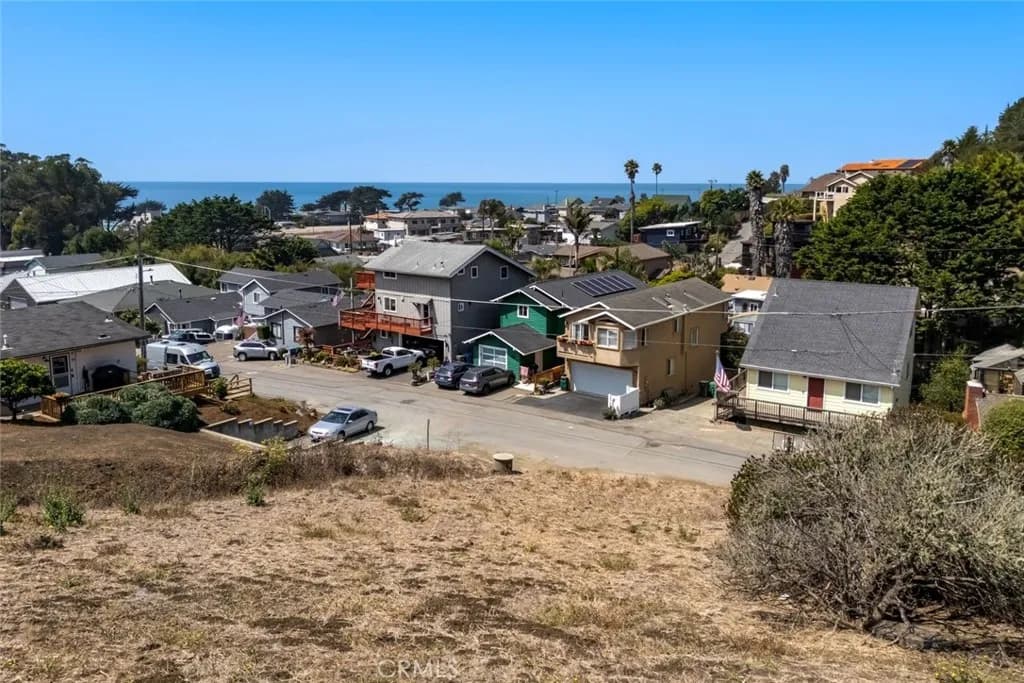
Cayucos sits on a narrow coastal shelf between Estero Bay and the hills, and nearly every boundary around it is fixed. Estero Bluffs State Park closes off the north end of town. Ranch and watershed lands rise inland, including the protected lands around Whale Rock Reservoir. To the south, the strand runs toward Morro Bay, with a thin corridor of existing oceanfront homes along Studio Drive.
Inside town, the county’s Estero Area Plan draws an Urban Reserve Line around the serviced community. The hillside paper-lot subdivisions east of Highway 1 sit outside that line and are zoned Rural Lands. They lack community water, sewer and roads built to current standards, which is why they remain largely unbuilt. Inside the line, the grid is small-lot and substantially built out. The commercial district spans only a few blocks of Ocean Avenue. The constraint is the number of properties that exist, and the market simply reflects it. If you’re buying, that means few homes to choose from at any one time.
Who runs water and sewer in Cayucos
The Cayucos Sanitary District handles sewer service. For decades it shared a jointly owned treatment plant with Morro Bay, under a joint powers arrangement dating to the early 1950s. After the two agencies couldn’t agree on terms for a replacement facility, the district formally withdrew in 2015. It broke ground on its own Cayucos Sustainable Water Project treatment facility in 2018. In September 2021 its new water resource recovery facility took over, and the district stopped sending wastewater to Morro Bay. In 2026 the agencies moved to end their remaining co-ownership of the retired shoreline plant property, with Morro Bay buying the district’s share.
Drinking water starts at Whale Rock Reservoir, built on Old Creek in the late 1950s and operated for the Whale Rock Commission agencies. The county built the Cayucos Water Treatment Plant in 1997. Three separate providers distribute the treated water. County Service Area 10A serves southern Cayucos. The other two are mutual water companies, Cayucos Beach Mutual and Morro Rock Mutual. Confirm which one serves a specific parcel with the county and the district.
Vacation rental rules written specifically for Cayucos
San Luis Obispo County’s Coastal Zone Land Use Ordinance regulates residential vacation rentals throughout the county’s coastal zone. Section 23.08.165 adds community-specific location standards inside the urban reserve lines of Cayucos, Cambria, Avila Beach and Los Osos. In the single-family areas of Cayucos, a proposed vacation rental must meet a minimum separation from other vacation rentals or visitor-serving accommodations. Multifamily areas have a separate separation standard, measured differently for condominiums. The standards also cap how many individual tenancies a residence may host in a calendar month. Occupancy limits are tied to bedroom count and on-site parking.
To operate one, you need a zoning clearance, a county business license and transient occupancy tax registration. A Minor Use Permit process can modify the location standards. Separation standards depend on what surrounds a parcel when you apply, so eligibility depends on both the property and the timing. Before you assume anything about rental use, verify the current standards and the property’s status with county Planning and Building.
The beach tract cottages and what rebuilding one involves
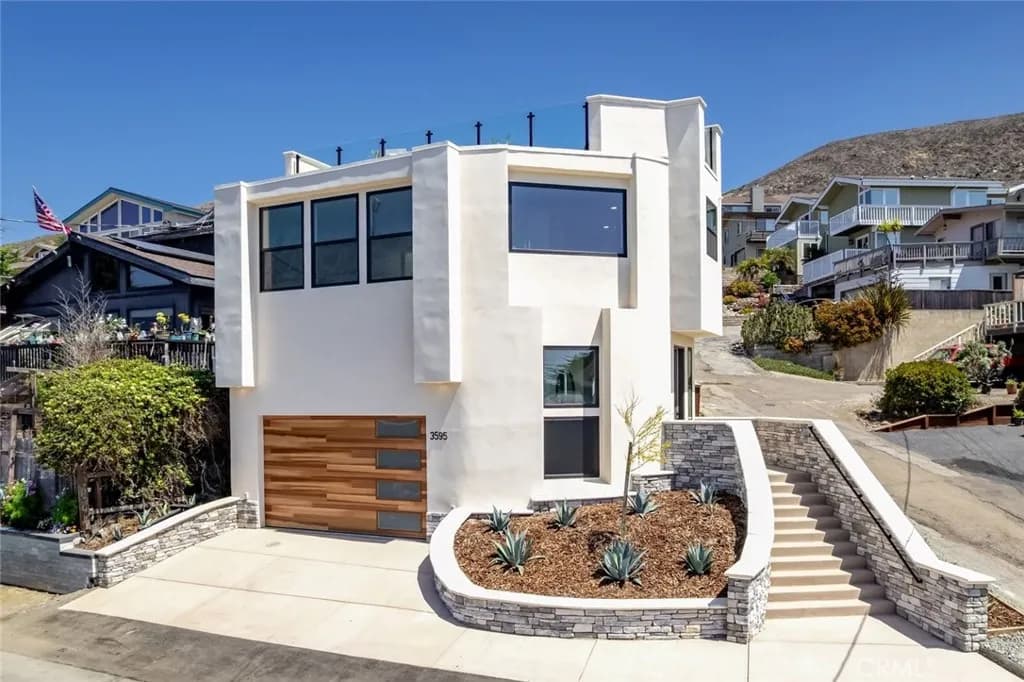
The Cayucos townsite was subdivided in 1875 around Captain James Cass’s shipping wharf. By 1923 the beachfront had been sold to a development company with tourism in mind. That sale seeded the compact cottage grid that still defines the blocks between Ocean Avenue and the sand. Today original cottages, mid-century bungalows and new custom homes often share the same street. Much of the older stock has been improved bit by bit over generations.
If you’re planning a substantial remodel or rebuild, it runs through the county’s coastal development permit process. The Estero Area Plan’s Cayucos urban area standards set the design, height and setback rules. Parcels closest to the water can carry combining designations that require geologic study. In some locations coastal permits can be appealed, which affects timelines rather than feasibility. Older cottages also often need foundation and systems work as part of any major project. Budget for the process as well as construction, and check requirements with county Planning and Building early.
The pier, Ocean Avenue and the plan that keeps the core low-key
The pier began in the early 1870s as the working heart of Cass Landing. It shipped dairy and produce to San Francisco and Los Angeles until rail and trucking ended its commercial life. After storm deterioration forced a partial closure in 2013, a community-backed restoration rebuilt the structure. The town celebrated its reopening in 2015. Winter storms in 2024 damaged the outer end. The county has since made repairs, including removing a short damaged end segment, so the pier’s exact layout is worth checking at any given time.
At the pier’s foot, the 1870s Veterans Memorial Hall is the successor to the original Cass warehouse site. It reopened in August 2025 as Cayucos Landing after a lengthy county restoration. It had been closed to the public since 2016. It’s now a county-operated event venue with a beachfront deck and a small Cayucos Historical Society museum. Downtown is still a few walkable blocks of Ocean Avenue storefronts. The Cayucos urban area standards in the county’s Estero Area Plan govern development in the core. They set the design, height and use framework for the beachfront district. If you’re considering commercial property here, review those standards with county planning.
What lies north of the last street
Most of the land north of Cayucos is public or rural by design, which answers whether it can be developed. Estero Bluffs State Park begins at the town’s edge and protects 353 acres and roughly four miles of shoreline. The Trust for Public Land bought it in 2000 and deeded it to California State Parks in 2002, after residents organized against a proposed resort and subdivision. A perpetual conservation easement held by the Cayucos Land Conservancy further limits facilities in the park.
Beyond the park boundary, Highway 1 runs through working ranchland toward Harmony and Cambria, under county rural and agricultural zoning. On the hills east of the highway, the old Morro Strand and Morro Rock View paper-lot subdivisions sit outside the Urban Reserve Line. They’re zoned Rural Lands without community water or sewer, and their legacy roads don’t meet current access standards. The open horizon north of town isn’t an accident of timing. It’s the community’s settled land use pattern.
About that Cayucos sunshine reputation
Cayucos has a long-standing local reputation for sunnier afternoons than some neighboring coastal towns. The geography gives that some logic. The town is tucked into the north curve of Estero Bay. The shoreline bends there, so the beach faces generally south rather than due west, and the hills rise close behind town. Still, marine-layer behavior along this coast varies street by street and hour by hour. Any given summer morning can be gray anywhere on Estero Bay.
We deliberately don’t publish climate statistics for individual towns. Microclimate claims are easy to overstate and hard to verify at neighborhood scale. If the fog pattern matters to you, visit the specific block you’re considering at different times of day and in different seasons. Compare it with Morro Bay and Cambria on the same days. The differences people describe are real enough to notice and too local to promise.