The sewer saga, resolved: from prohibition zone to a completed county system
Los Osos spent decades under one of California’s most famous wastewater standoffs. In 1983 the Central Coast Regional Water Quality Control Board imposed a septic discharge prohibition over the densest part of town. Concentrated septic systems there were loading nitrates into the groundwater, and a building moratorium followed. The county’s original sewer effort stalled in the late 1990s. In 1998 residents formed the Los Osos Community Services District, which took over the project. After a board recall in mid-construction and the project’s cancellation, the district defaulted on its state loan in 2005. It filed for Chapter 9 bankruptcy in August 2006.
The county then assumed the project. Construction began in early 2015. The Los Osos Water Recycling Facility went into operation in 2016, and construction was completed in 2017. Connections across the prohibition zone finished in 2020. Today the system is a county-operated utility, and its construction repayment and operating costs appear on property tax bills. If you’re buying, the sewer question still comes up, and it has a settled answer: built, connected and running. What’s left to verify in escrow is the parcel-level charges.
One groundwater basin, a court judgment and an annual growth decision
Los Osos relies entirely on the Los Osos Groundwater Basin. After the growth boom of the 1970s and 1980s, the basin suffered seawater intrusion and nitrate contamination. In 2015, litigation among the water providers ended in a court-approved Stipulated Judgment. It created the Los Osos Basin Management Committee, made up of the Los Osos Community Services District, Golden State Water Company, S&T Mutual Water Company and the county. The committee implements the Basin Plan, monitors seawater intrusion and reports to the court each year. The district’s general manager has described the intrusion front as stabilized after years of conservation and adjusted pumping.
The basin now drives the pace of building. Under the county’s Growth Management Ordinance, the committee assesses basin conditions and sends the county a recommendation each year. The Board of Supervisors then sets the maximum number of new dwelling allocations for the coming year. It made that decision most recently in December 2025, for 2026. The recommendation and the adopted rate don’t always match. If you plan to build, check the current year’s allocation and the committee’s latest basin assessment rather than assuming a fixed trajectory.
Why Los Osos has a structural ceiling on new supply
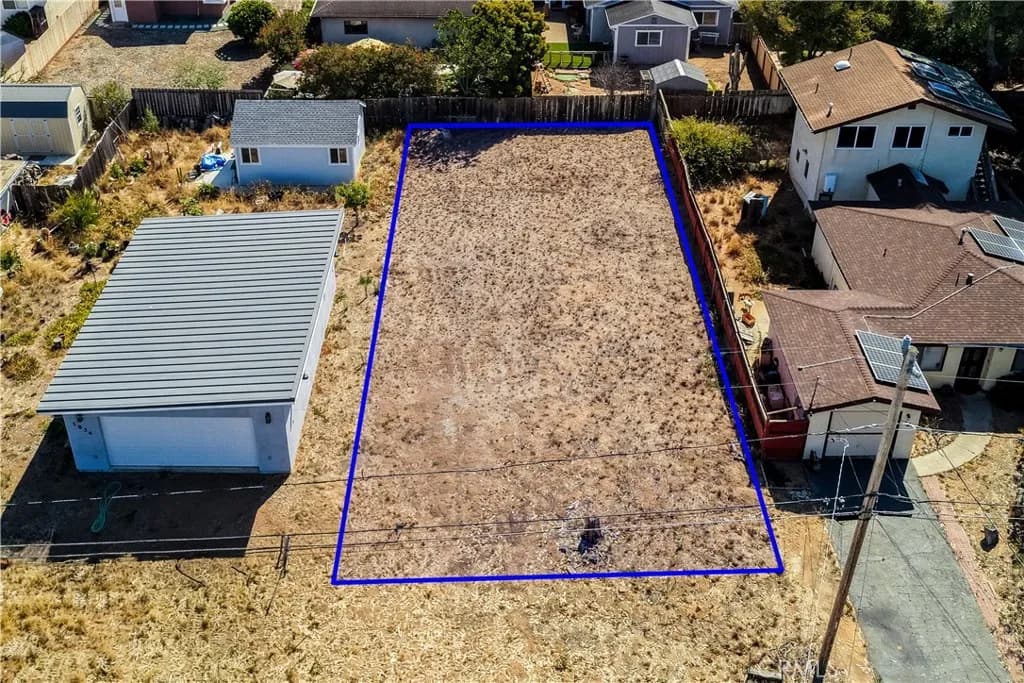
Even with the moratorium lifted, Los Osos is one of the most supply-constrained communities on the Central Coast, by design. The entire town sits on an ancient dune landform, and its baywood fine sands support sensitive habitat. The county’s coastal program maps the community with environmentally sensitive habitat constraints. New ground disturbance requires mitigation under the Los Osos Habitat Conservation Plan. That’s a 25-year federal permit program covering species such as the Morro shoulderband snail. New dwellings also require both a growth allocation and verified water and sewer service. Accessory dwelling units currently aren’t allowed under the county’s coastal zone ordinance.
On top of that is the annual growth cap, which the Board of Supervisors sets based on groundwater conditions. Priority runs through a Waitlist to Build that the county established in 1990. The result is a permanent, rules-based limit on how much housing can be added in any year, administered parcel by parcel. If you’re buying vacant land, that makes knowing the process essential. For the community as a whole, it makes the existing housing stock the main event.
Baywood Park: the bayfront village inside the town
Baywood Park began as a failed Victorian-era land scheme. It was surveyed in 1889 as El Moro and staked into thousands of small lots, in anticipation of a coastal rail line that never materialized. In the 1920s a Los Angeles investor marketed the lots anew and renamed the area Baywood Park. That origin left a legacy grid of compact parcels near the water. The grid gives the neighborhood its distinct scale today.
Modern Baywood is the closest thing Los Osos has to a waterfront downtown. A small commercial pocket along 2nd and 3rd Streets has restaurants, shops and inns. The public pier at 2nd Street and El Moro Avenue looks across the back bay toward the sandspit. The pier standing today is the latest of several the community has built on the site. The previous one was lost to a storm in 1983. A farmers market held Monday afternoons on Santa Maria Avenue between 2nd and 3rd Streets anchors the calendar, along with pier-side community events. If you’re buying, Baywood offers something rare in the county: a walkable bayfront village pattern at neighborhood scale, with the estuary’s tides as the front yard.
The view streets: Cabrillo Estates and the elevated west side
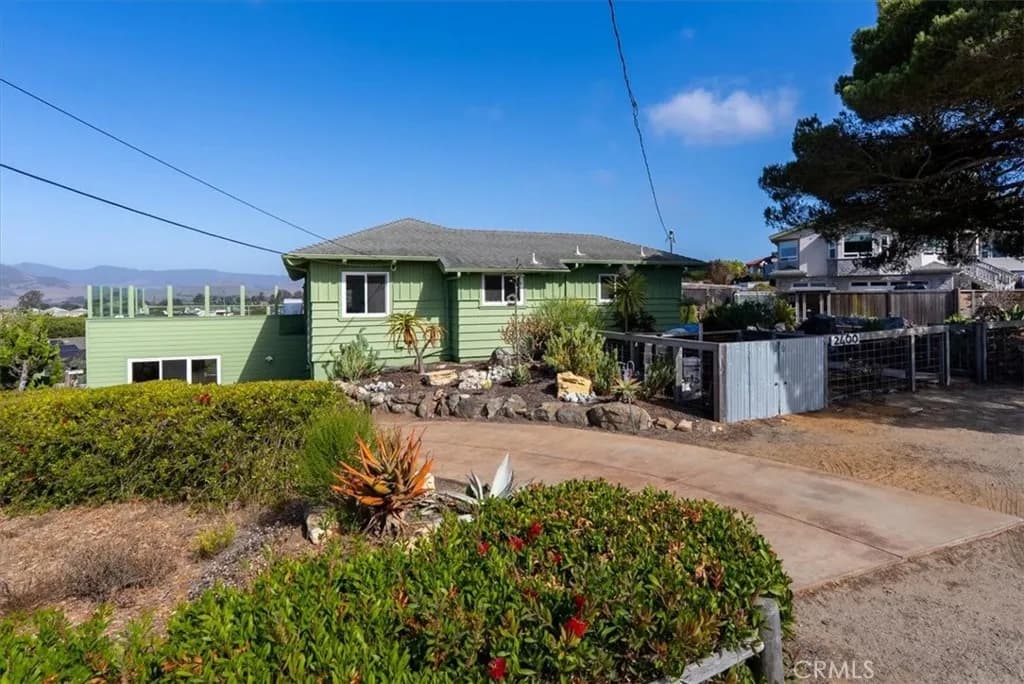
Los Osos rises from sea level near the bay to elevated ground on its south and west sides. That topography created a distinct tier of view neighborhoods. Community Services District emergency planning documents identify Cabrillo Estates and Bayview Heights as the community’s two hillside residential areas. They sit on opposite flanks. Bayview Heights is to the east and southeast. Cabrillo Estates is to the southwest, where it climbs toward the Pecho Valley Road corridor at the Montaña de Oro entrance. Its higher streets look out across the estuary, sandspit, Morro Rock and open ocean. Nearby Sunset Terrace looks out over Morro Bay.
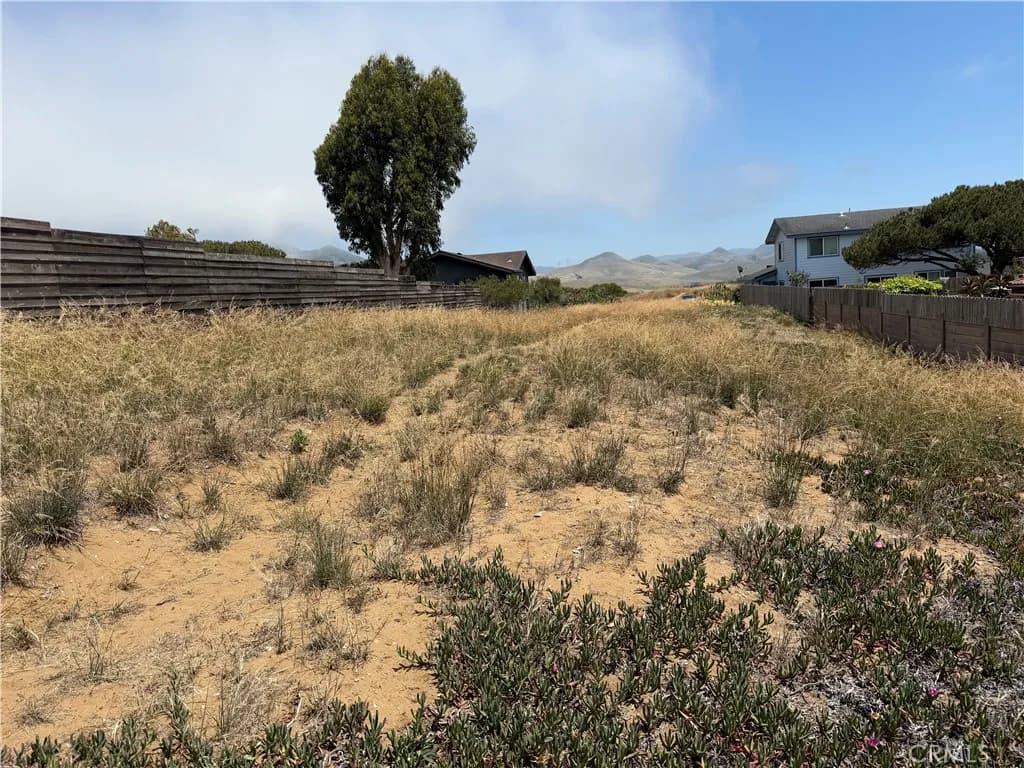
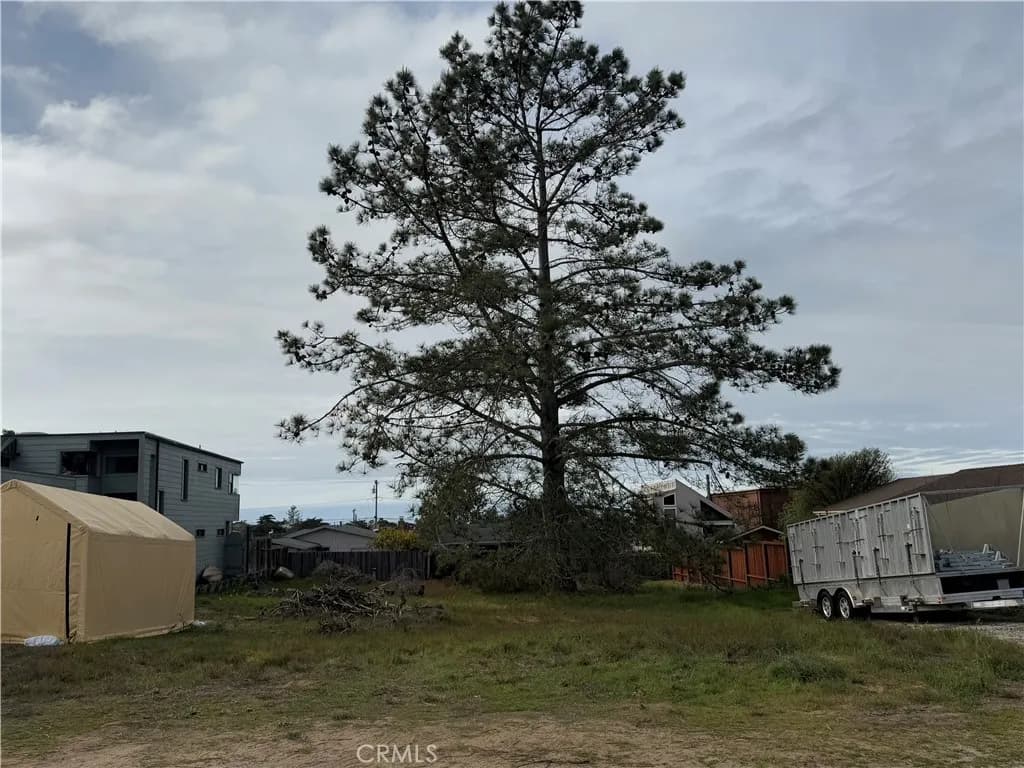
These neighborhoods work differently from the cottage grid near the water. The terrain is steeper, orientation matters more and value depends heavily on sightlines. If you’re buying here, evaluate each property’s specific view corridor. Where a lot is undeveloped, evaluate the full county entitlement path too. Vacant parcels anywhere in the sewer service area remain subject to the same Waitlist position, growth allocation and habitat mitigation requirements as the rest of the community.
Montaña de Oro is the headline amenity, not a footnote
Los Osos doesn’t just sit near open space. The town ends at it. Montaña de Oro State Park covers roughly 8,000 acres with seven miles of shoreline, and State Parks calls it one of California’s largest state parks. Its only road entrance runs through Los Osos via Pecho Valley Road. The park’s signature features start with the Bluff Trail along sea cliffs and coves, and Spooner’s Cove beach beside the historic Spooner Ranch House visitor center. There’s also Valencia Peak at 1,347 feet, and trail networks for hiking, mountain biking and horseback riding.
If you live here, the park works as a backyard wilderness. It’s open daily from 6 a.m. to 10 p.m. and reachable in minutes from any neighborhood in town. Two smaller protected areas sit inside and beside the community itself. One is the Los Osos Oaks State Natural Reserve, with its centuries-old dwarf oaks. The other is the El Moro Elfin Forest boardwalk above the estuary. If you’re weighing Los Osos against other coastal towns, treat this concentration of protected land as a permanent feature of the location. It can’t be developed away.
Bayfront, not beachfront: the estuary defines the waterfront
The Los Osos waterfront is the back end of the Morro Bay estuary. It’s a roughly 2,300-acre system where Los Osos and Chorro Creeks meet the sea behind a long natural sandspit. The estuary was designated a State Estuary in 1994 and an Estuary of National Significance in 1995. The Morro Bay National Estuary Program, one of 28 in the country, coordinates its protection. At high tide the back bay is a paddler’s landscape of glassy channels and eelgrass beds. At low tide it becomes exposed mudflats rich with shorebirds. You reach the sandspit’s ocean beach by boat or paddle, not by a stroll from town.
If you’re buying, this should shape your expectations. Waterfront in Los Osos means estuary frontage and bay views, with the tide cycle changing the scene twice daily. It doesn’t mean a walk-out surf beach. The sandy ocean shoreline is nearby, inside Montaña de Oro. If you’re drawn to birdlife, kayaking and protected-water paddling, the estuary is the amenity itself. Its protected status also shapes what can ever be built along it.