Cambria’s water moratorium and what it means if you’re buying
Cambria’s water comes from wells that draw on small coastal creek aquifers, mainly the San Simeon and Santa Rosa Creek basins. The Cambria Community Services District (CCSD) manages that supply. It’s limited and vulnerable to seawater intrusion during drought. So in November 2001 the district declared a Water Code section 350 water-shortage emergency and stopped issuing connections. That declaration is still in force, and the CCSD isn’t issuing any new residential or commercial water or wastewater connections. The waiting list for connections was set up in 1986. It had already closed to new applications at the end of 1990, in coordination with the county’s 1990 Growth Management Ordinance, so it isn’t a queue that moves. For anyone buying, building or remodeling here, this is the single most consequential fact.
In practice, what matters is a parcel’s specific water status. Properties with an active meter, a grandfathered (non-active but pre-existing) meter or an active service transfer can generally pursue a remodel or reconstruction within their existing allocation. That work is subject to a county Will Serve letter and a Cambria Fire Department plan review. Grandfathered meters are non-active service commitments that predate the 2001 emergency declaration. They don’t need an Intent to Serve letter or a connection permit. They do carry minimum bi-monthly billing to keep the commitment alive. Many vacant lots, by contrast, have no water position and can’t currently be developed.
The supply picture is still changing. Cambria’s Water Reclamation Facility was originally built in 2014 under an emergency coastal development permit during the statewide drought. It has spent more than a decade seeking a permanent permit. The county Planning Commission approved a permanent coastal development permit in February 2026. In June 2026 the Board of Supervisors upheld that approval and rejected six local appeals. Six appeals went to the California Coastal Commission. On September 9, 2026 the Commission found no substantial issue, which left the county’s permit standing and closed out the Coastal Act appeal route. That decision has two limits worth holding onto. It authorized no new service connections and didn’t disturb the 2001 moratorium. And it was a permitting milestone, not a start date. The facility still needs other agencies to sign off, or to confirm they have nothing to sign off on, before it treats water. So connection availability is unchanged. If you’re buying, verify a parcel’s water position and the project’s current status directly with the CCSD rather than relying on secondhand summaries.
Lodge Hill lots: why most vacant parcels aren’t buildable inventory
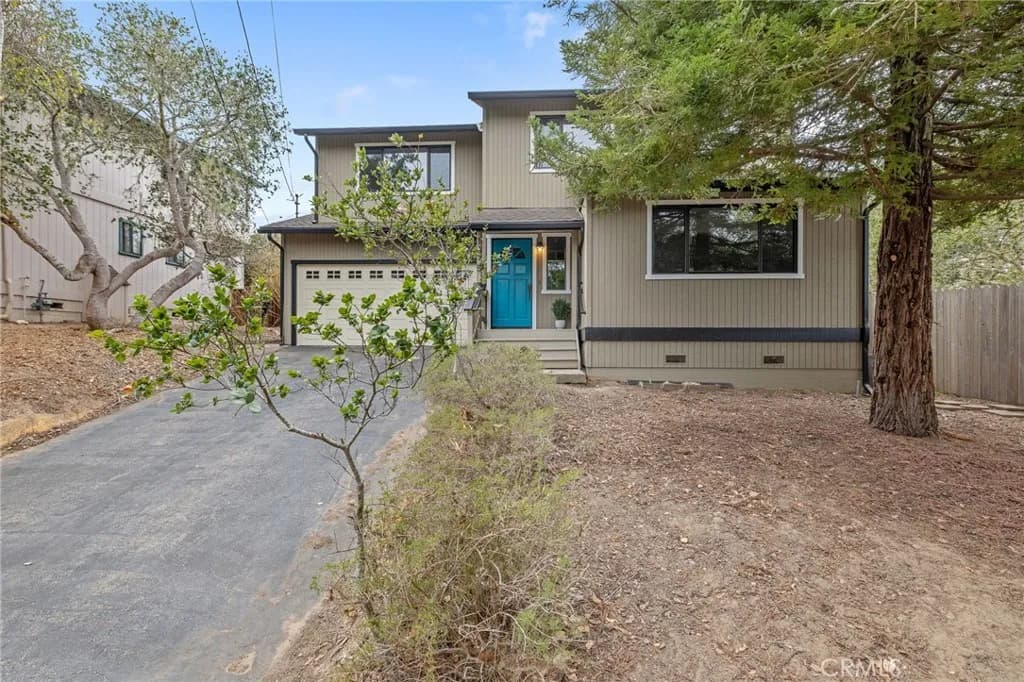
Lodge Hill sits on the hillsides south of Cambria’s commercial district. It was subdivided in the 1920s and 1930s into more than 4,000 small parcels. The State Coastal Conservancy calls it one of the largest concentrations of antiquated, substandard lots on the California coast. Many sit on steep, densely forested ground. Don’t treat these paper lots as buildable housing supply. Three overlapping filters decide buildability: a lot’s water position, whether it can clear coastal permitting given slope and sensitive Monterey pine habitat, and its physical developability.
A long-running public program has been steadily removing the most sensitive of these lots from the development pool. Since 1986 the county’s transfer-of-development-credit program has acquired priority Lodge Hill parcels and retired their development potential. The Land Conservancy of San Luis Obispo County administers it with State Coastal Conservancy funding. Many of the parcels have been transferred to the CCSD under permanent conservation easements. The program’s explicit aim is to reduce the total number of homes that could eventually be built in Cambria. That’s meant to ease pressure on water and fire services while protecting the pine forest.
If you’re buying, a vacant Lodge Hill lot on the market isn’t automatically a building site. Some are held as view protection, long-term speculation or open-space additions rather than near-term construction opportunities. Start by confirming a specific parcel’s water position with the CCSD and its coastal-permitting status with county Planning.
Living in a native pine forest: fire hazard, tree duty and insurance
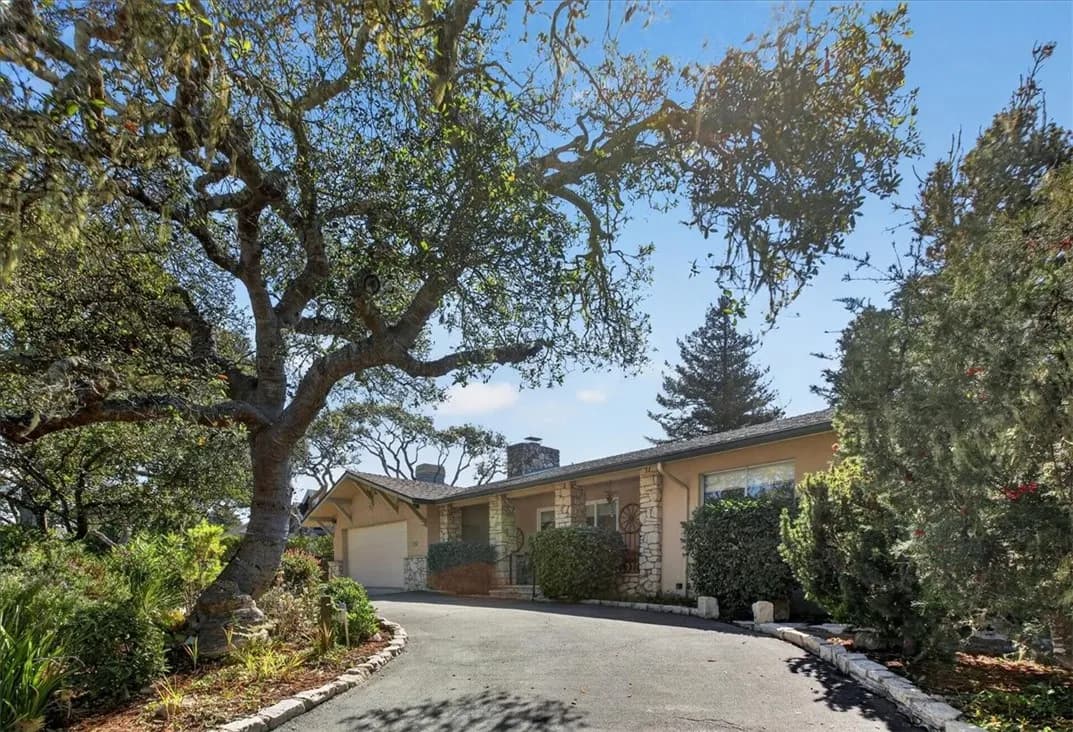
Monterey pine forest occurs naturally in only three places on the North American mainland, according to the State Coastal Conservancy, and Cambria is one of them. The others are on the Monterey Peninsula and around Año Nuevo, on the San Mateo and Santa Cruz county line. That rarity is central to the town’s identity and to how property is stewarded. It also means much of the residential area is a wildland-urban interface within a state-mapped fire hazard severity zone. Cambria is in a State Responsibility Area. That puts existing homes under the state’s hundred-foot defensible-space duty in Public Resources Code section 4291, and new construction under wildland-urban-interface building standards. Hazard classes are mapped street by street rather than town-wide, so look up the designation on a specific parcel rather than assuming it.
The forest itself is under stress. Prolonged drought, worst in 2012-2015, killed or damaged a large share of Cambria’s pines. Agency and local estimates put mortality at roughly 40% overall, with far higher figures in some stands. Monterey pines are relatively short-lived, and pests such as bark beetles and diseases like pitch canker compound drought stress. Agencies including CAL FIRE and the county Fire Safe Council treat dead and hazardous trees as both a forest-health and a wildfire-fuel problem. So do local groups such as Greenspace and the Cambria Forest Committee. Property owners are generally responsible for maintaining and removing hazardous trees on their own parcels.
If you’re buying, that means recurring costs and diligence items. Budget for tree and defensible-space maintenance, understand a forested parcel’s tree-liability exposure and confirm current insurance availability. In high-hazard areas across California, some owners rely on the FAIR Plan, the state’s insurer of last resort, when standard coverage isn’t available. Whether that applies to a given Cambria property is worth confirming during escrow rather than assuming.
Two villages, a beach strip and hillside tracts: how Cambria is organized
Cambria is organized around two distinct commercial cores. The East Village is the older of the two and sits on the inland side along Santa Rosa Creek. It holds many of the town’s earliest buildings, its antique stores and long-standing restaurants, and the Cambria Historical Museum. The West Village sits between Cambria Road and Highway 1. It’s oriented toward visitors and leans toward galleries, tasting rooms and cafes. Between the two is what the county calls the Mid-Village, on the crest of the hill that separates the two centers. So the walk from one to the other climbs a real grade, and most residents drive it.
Separate from both is the Moonstone Beach Drive corridor, a coastal strip of oceanfront lodging and restaurants organized around a roughly mile-long boardwalk. It works mostly as a visitor-serving and lodging zone rather than a conventional residential neighborhood.
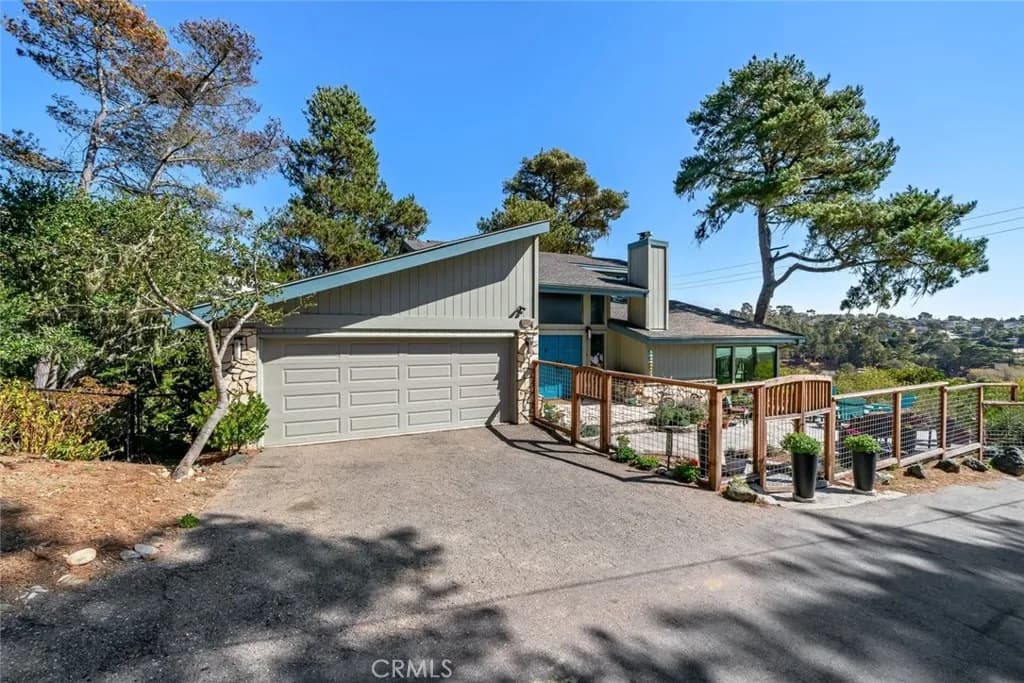
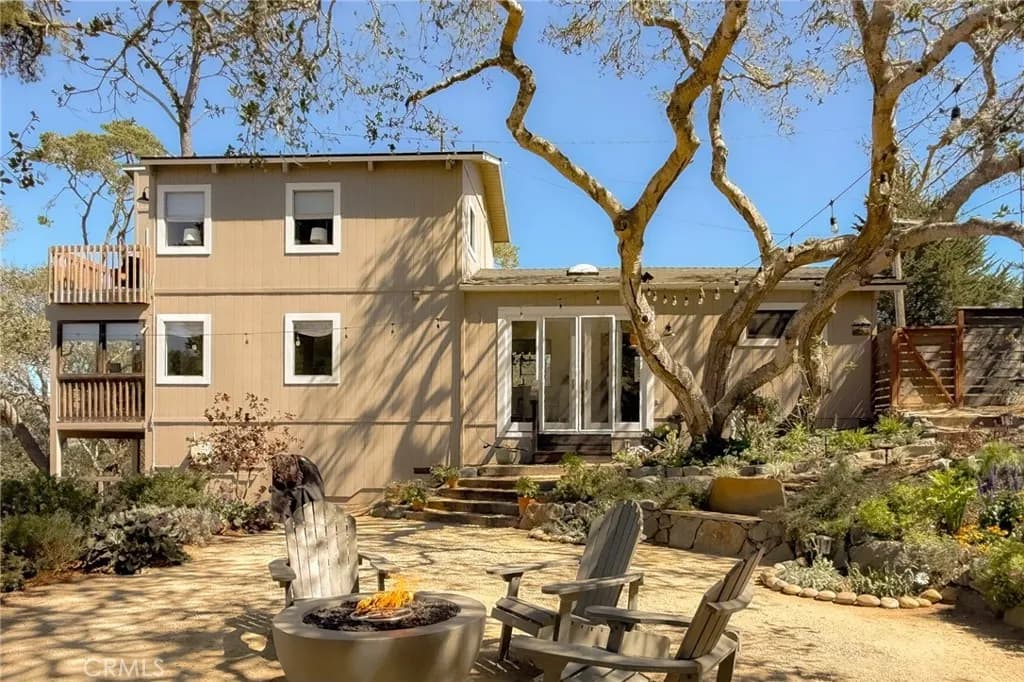
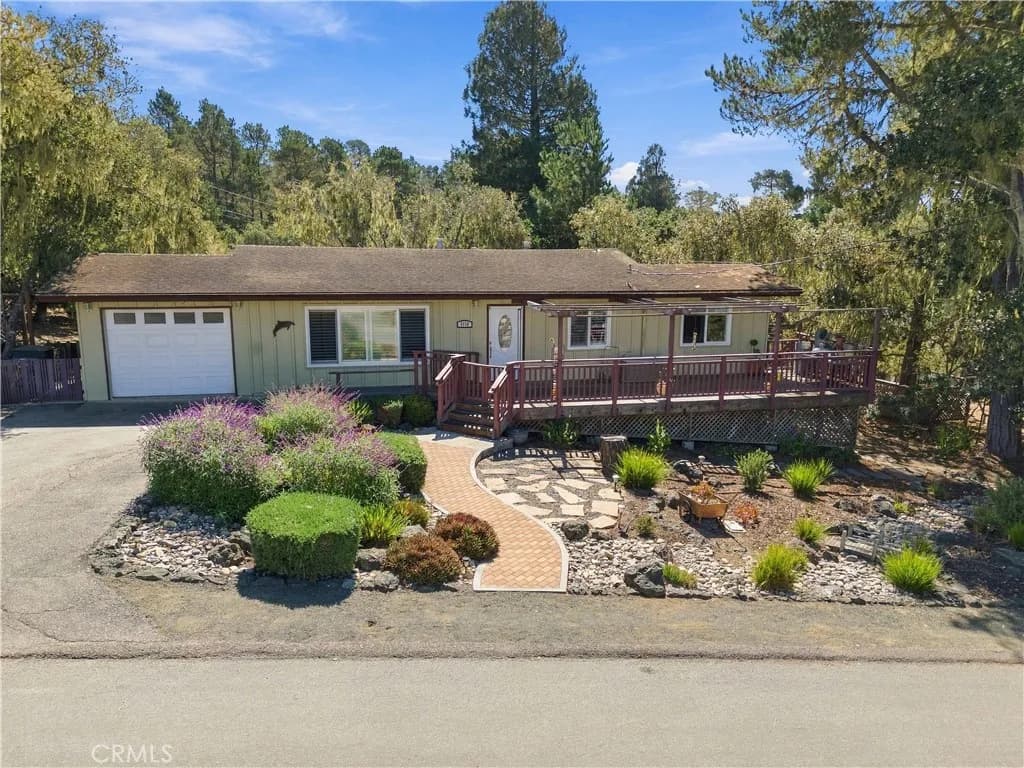
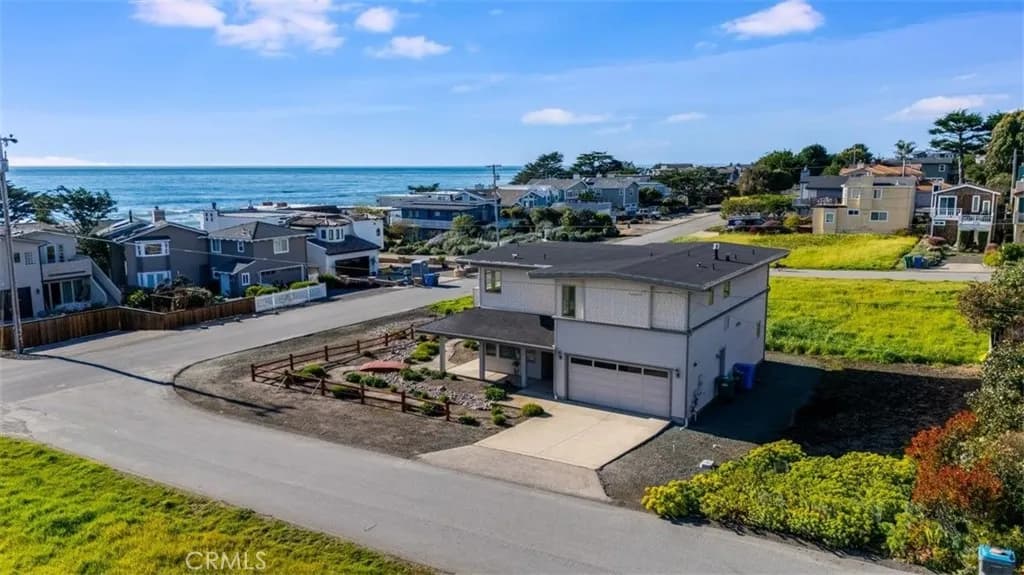
Residential Cambria is spread across hillside and terrace tracts, each with its own character. Lodge Hill and Happy Hill are on the forested slopes. Marine Terrace and Park Hill are nearer the ocean, on the marine terrace. Wooded large-lot areas include Pine Knolls and Cambria Pines. The community is compact and the CCSD serves all of it, so these areas don’t differ by local government or service provider. The practical differences come down to ocean versus forest orientation, lot slope and tree cover, and proximity to the villages and Fiscalini Ranch. Critically, they also come down to each parcel’s individual water and permitting status.
A Highway 1 gateway town and the Big Sur closure
Cambria’s visitor economy is tied to State Route 1, so the condition of the road to the north matters here. For roughly three years, a series of landslides closed a segment of Highway 1 through Big Sur in Monterey County. The Press Democrat called it the longest sustained closure in that stretch’s history. The final segment, at Regent’s Slide, is roughly 40-45 miles south of Carmel. It reopened to through traffic at noon on January 14, 2026, about 90 days ahead of schedule, which restored end-to-end travel along the coast.
For Cambria specifically, one distinction matters. Throughout that multi-year closure, Highway 1 through San Simeon, Cambria and Ragged Point stayed open and accessible. The closed 6.8-mile segment was well to the north, in Monterey County. The closure reshaped visitor flow along the broader Big Sur corridor and affected businesses that depend on through traffic. But Cambria was reachable from the south the entire time.
If you’re weighing Cambria’s tourism-linked economy, know that Highway 1 is a geologically active corridor. The U.S. Geological Survey has identified 75 miles of the Big Sur coastline as one of the most landslide-prone areas in the western United States, with more than 1,500 mapped slides. Caltrans notes that seasonal storms can bring temporary closures. So visitor flow to a gateway town like Cambria depends on a road that is periodically disrupted. That’s a structural feature of the location, not a one-time event.
Services and medical access: what remoteness means here
Cambria has its own school district, community services district and healthcare district, plus grocery and everyday retail and active civic organizations. In that sense it’s a full-service year-round community. At the same time, it’s genuinely remote from hospital-level care. If you’re weighing full-time living here, it helps to know the geography.
Emergency response is based locally. The Cambria Community Healthcare District is a hospital district formed in 1947. It operates an advanced-life-support ambulance service for Cambria, San Simeon and the surrounding North Coast, a rural service area of roughly 310 square miles. Fire protection and first response come from the Cambria Community Services District’s fire department.
For acute hospital care, though, there’s no hospital in Cambria. The nearest general acute-care hospital is Adventist Health Twin Cities in Templeton, reached by Highway 46. The San Luis Obispo hospitals, Adventist Health Sierra Vista and French Hospital, are somewhat farther south. In typical conditions these are roughly a 30-45 minute drive. That drive time is a real consideration for households with significant medical needs. Everyday groceries, dining and basic services are available in town across the two villages. So the remoteness is specifically about specialized and emergency hospital care, not daily necessities.
Wildfire preparedness and evacuation planning in a wildland-urban interface community
Cambria is a wildland-urban interface community set within a stressed pine forest, so evacuation planning is a recognized local issue. If you’re buying, consult the official plans rather than rely on impressions. County and CAL FIRE planning documents identify Cambria as a wildland-urban interface community where forest and homes intermingle. CAL FIRE’s unit fire plan specifically flags the old-growth Monterey pine stands in and around the village as hazardous in a fire, evacuation and high-wind scenario.
The community’s egress has been a subject of active planning discussion. San Luis Obispo County has established pre-designated countywide evacuation zones, so residents can tell whether they’re under an evacuation warning or order. A Cambria-specific evacuation guide has been developed in partnership with the Cambria Fire Department, the county Office of Emergency Services and CAL FIRE San Luis Obispo.
If you’re considering a specific address, look up its evacuation zone through the CCSD or county resources. Review the Cambria evacuation guide, and factor defensible-space obligations into your decision. Treat it as a matter of checking the plan, not a source of alarm.