The power plant site: closed, contested and not yet decided
The three 450-foot stacks facing Morro Rock date to the 1950s. That’s when Pacific Gas and Electric built the plant that gave the city its nickname, Three Stacks and a Rock. The plant stopped generating in 2014. That left its current owner, Vistra, with roughly 107 acres of waterfront land, one of the largest redevelopment questions on the Central Coast. In 2020 Vistra proposed a battery energy storage project on part of the site. A 2021 memorandum of understanding with the City paired that review with a commitment to demolish the generation building and stacks. The project then took a winding path. Vistra paused City review in late 2024 to pursue state-level certification. It formally withdrew its City application in April 2025. By late 2025 it had confirmed it wouldn’t seek the state path either.
That leaves the site with no entitled project and the stacks still standing. Reporting places the demolition obligation in the 2027-2028 timeframe, with an alternative payment to the City if it isn’t met. The 2021 agreement set an end-of-2027 date, and later coverage describes 2028. Treat the exact deadline as unsettled rather than picking one. Meanwhile the City is running a grant-funded rewrite of its Waterfront Master Plan, the first since the plan was written in 1996. It has expanded the plan boundary to take in the power plant property and the old sewer treatment plant site. That process is estimated to finish in late 2026, and it’s where visitor-serving uses for the property will be defined. Because the master plan is part of the Local Coastal Program, it goes through the Planning Commission and City Council and then the Coastal Commission. Nothing about the site’s future is decided. If you’re buying, treat any claim to the contrary, in either direction, as speculation. What you can know is the process. City planning documents, Vistra’s obligations and public hearings will shape outcomes, and the City of Morro Bay is the authoritative source for current status.
Offshore wind: a federal reversal still under way, with the outcome unsettled
In December 2022, the federal government auctioned three floating-wind lease areas roughly 20 miles or more off the coast near Morro Bay. Together they span about 376 square miles. Equinor Wind US won one, and its record title later passed to Atlas Offshore Wind. Central California Offshore Wind won another. It was renamed Golden State Wind and is a partnership of Ocean Winds and Reventus Power. Invenergy California Offshore won the third. It branded its project Even Keel Wind, and its leaseholder is now recorded as California Offshore. The projects contemplated floating turbines in deep federal waters, far beyond the visual scale many people first assume. They also set off a parallel local conversation about which port and harbor-support facilities might locate where. That question was never settled.
Then the federal posture reversed. A 2025 presidential memorandum paused offshore wind leasing and permitting. Under it, the Interior Department reached buyout settlements with two of the three leaseholders, each paired with commitments to redirect investment into other energy sources. The two aren’t at the same stage, which matters when you read coverage that treats them as one event. The Invenergy lease was settled in June 2026. The Bureau of Ocean Energy Management formally cancelled and rescinded it in July 2026. The Golden State Wind settlement was signed in April 2026. It commits Interior to cancel that lease only once the company demonstrates it has made the required investments, so the lease remains uncancelled. The Equinor-originated lease hasn’t been subject to a buyout at all.
The settlements are contested. In June and July 2026, California’s Attorney General and Energy Commission issued notices of intent to sue over both. The notices allege violations of the Outer Continental Shelf Lands Act and open a cure window before any suit is filed. The Energy Commission separately subpoenaed records from both companies. Opponents such as the REACT Alliance have publicly welcomed the cancellations. Both positions are advocacy, and no suit has been resolved. No one should represent the outcome as known, for the remaining lease or for local port investment.
North of the Rock versus downtown and the harbor: two different Morro Bays
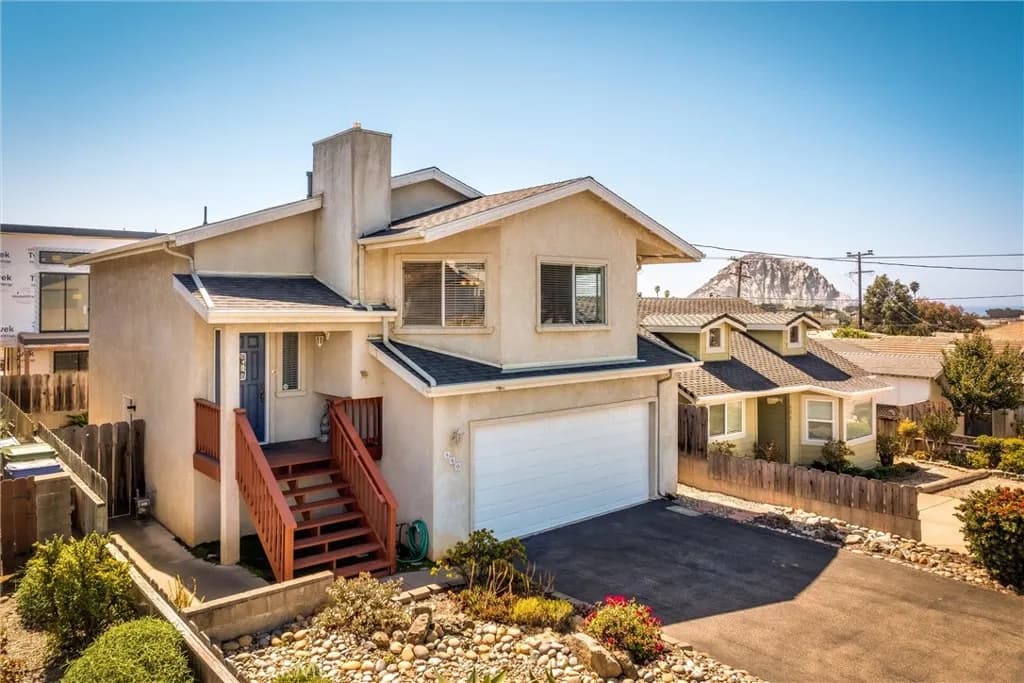
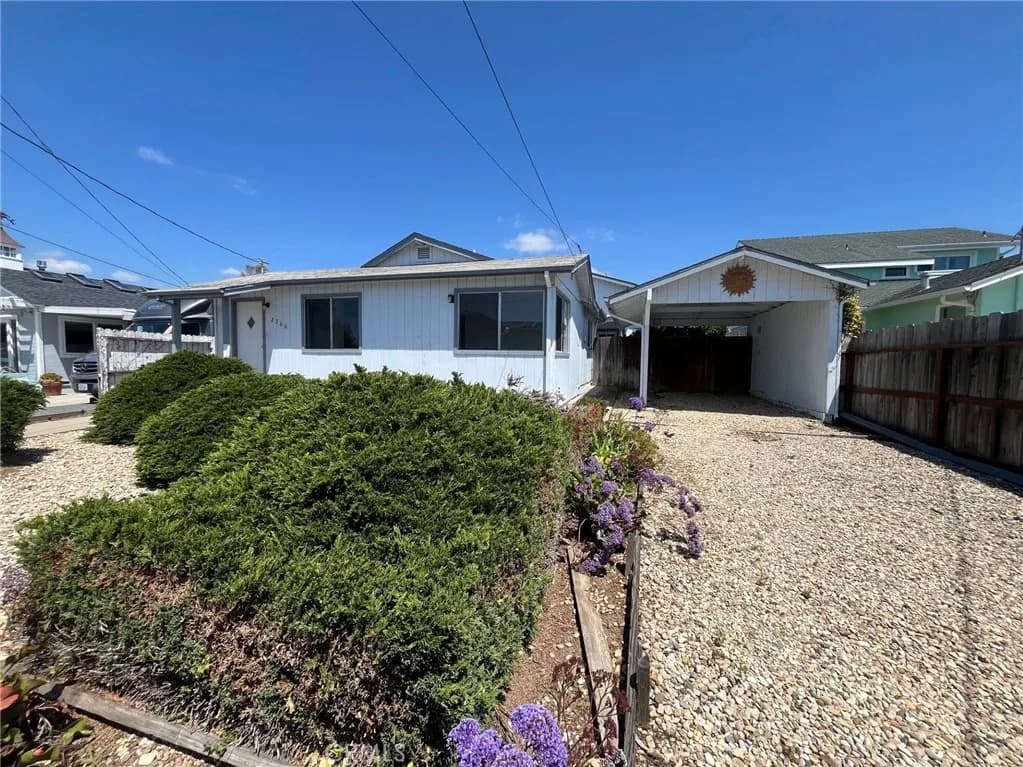
Morro Bay’s residential geography splits along recognizable lines. North Morro Bay, the district beyond the Highway 41 junction, is mostly one- and two-story single-family housing. The North Main Street corridor’s neighborhood-scale commercial uses serve it. The Del Mar pocket, around Del Mar Park and Del Mar Elementary, anchors the northeast side. West of Highway 1, the Beach Tract and the Cloisters have flat, walk-to-sand streets. The trade here is closeness to Morro Strand’s beaches and an everyday residential pattern, at a greater distance from the Embarcadero’s activity.
Downtown and the harbor area offer the opposite trade. You get immediate access to the city’s commercial core and the waterfront, and the visitor economy’s foot traffic and event rhythm are part of the setting. Above both, Morro Heights and the hillside streets trade walkability for elevation and view corridors toward the Rock, the harbor and the open ocean. None of these is objectively better. They price and live differently. If you’re buying, the practical questions are which trade-offs fit you and how a specific street sits relative to the corridors of activity. Zoning and design-guideline areas also vary across town, so verify any renovation assumptions parcel by parcel with the City.
Morro Bay runs its own short-term rental program, and the details matter
Morro Bay regulates short-term rentals (STRs) under its own municipal ordinance, adopted in 2020. That sets it apart from the unincorporated communities nearby, where San Luis Obispo County’s coastal zone ordinance governs vacation rentals. The rules come in layers. You need an STR permit, a business license and a transient occupancy tax account. Permits renew every year, with periodic inspections. Full-home rentals in residential zones are limited by a citywide cap and a minimum separation buffer between rentals. Applicants beyond the cap join a waitlist kept in chronological order. Home-share rentals in residential zones and rentals in commercial zones sit outside the cap and buffer. Accessory dwelling units (ADUs) can’t be used as STRs.
Two features carry particular weight in transactions. First, permits don’t transfer with a property sale. A permit is tied to a specific property and owner. It isn’t valid for a successor owner or host, and it can’t even be passed between family members. So buying a home that operates as an STR today doesn’t give you the right to keep operating it. The same rule gradually retires the rentals that predate the current standards. Existing STRs that don’t meet the separation buffer were allowed to continue. So were the handful of ADUs permitted before the ADU prohibition. That status ends when the property sells or a permit lapses. Second, availability moves slowly. The City held a permit audit year in 2025 and issued no new permits during it. In January 2026 it authorized a small number of waitlisted properties to move toward permits. If you’re underwriting rental income, verify the current cap, the waitlist length and your property’s eligibility directly with the City before you commit.
A working waterfront on public trust tidelands
Morro Bay’s harbor isn’t decorative. Commercial fishing has operated here since before the harbor took its modern form. Its history runs from the abalone fishery that peaked in the 1950s to today’s landings of species such as halibut, sole and rockfish. Oyster farms operate alongside it in the shallow back bay. The waterfront itself is a wartime artifact. The federal government filled and armored the Embarcadero area in 1942-1944 for a Navy amphibious training base, and the T-piers and harbor works from that era are still in use.
The legal structure is as distinctive as the history. The filled lands west of Embarcadero Road are state-granted public trust tidelands. The City has held them in trust since incorporation in 1964. Its Harbor Department manages them and operates as an enterprise fund, paid for by revenue from tideland leases, slips and fees. Waterfront businesses there hold leases from the City. Public-trust use limits favor water-dependent commerce, navigation and visitor-serving uses. They exclude residential use. If you’re considering a commercial opportunity on the Embarcadero, you’re evaluating lease terms and City lease-management policies, not fee title. The same structure explains why the fishing fleet and the visitor economy stay deliberately interwoven, rather than one displacing the other.
The water reclamation facility changed the city’s water supply
Morro Bay’s water portfolio has been rebuilt over the past decade. The City’s supply rests on two sources. The first is imported State Water, delivered since the mid-1990s through the State Water Project and treated inland before it’s piped to town. The second is local groundwater from the Morro Basin wells. The City abandoned desalination as a source of supply, having drawn very little water from it across the plant’s life. The plant itself wasn’t mothballed, though. Its brackish reverse-osmosis trains still run, treating high-nitrate water from those wells so it can be blended or filtered to drinking standards. The major change is the Morro Bay Water Reclamation Facility, an advanced treatment plant relocated inland off South Bay Boulevard. It began treating all of the city’s wastewater in late 2022 and reached full project completion in 2024. The timing proved fortunate. The old coastal treatment plant it replaced was inundated in the January 2023 storm flooding, shortly after it went offline.
The facility does more than replace outdated infrastructure. It’s designed for indirect potable reuse. Highly purified water is injected into the local groundwater basin for later recovery through City wells. That protects the basin against seawater intrusion and builds a drought buffer. City materials project the system could ultimately supply a large share of local water needs. If you own property here, the City controls its own water and sewer utilities, and supply resilience has measurably improved. Confirm current conditions, rates and any conservation rules with the City’s utilities division. Don’t assume them from older coverage.
Reading the flood and tsunami maps near the waterfront
Morro Bay’s low-lying areas appear in the state’s tsunami hazard mapping. They include the Embarcadero, the harbor edge and land near the creek mouths. The harbor has real history here. The 2011 Japan tsunami damaged California harbors including Morro Bay, and the January 2023 storms flooded the city’s old coastal wastewater plant. The California Geological Survey publishes Tsunami Hazard Area maps, updated in 2021 for San Luis Obispo County. They model worst-case but plausible scenarios, and you can search them by address through state tools.
Be precise about what these maps are. The state publishes them for local evacuation planning. It says plainly that they aren’t legal documents and don’t meet disclosure requirements for real estate transactions or any other regulatory purpose. In a transaction, the natural hazard disclosure report addresses the statutory flood and hazard zones for the specific parcel. If you’re buying low-lying property, you can layer in elevation, flood insurance considerations and the City’s hazard planning documents.
Check at the parcel level, because the boundary doesn’t simply track distance from the ocean. The state layer can be queried by address. It puts the Embarcadero inside the hazard area, while the bluff-top blocks of downtown, only a short walk uphill, fall outside it. Low ground reaching inland along the creek can be mapped in even where the ocean is no longer in sight. Much of the north-end residential grid sits outside. Most of Morro Bay’s residential fabric is on higher ground above the waterfront. That’s a statement about the town, not about any given street. So a parcel-level review beats a town-level generalization in either direction.